

Introduction
Every successful business has one thing behind it — a clear marketing strategy. Without it, even the best product can struggle to reach the right people. In this guide, you’ll learn exactly how to build a successful marketing strategy for your business, step by step — from defining your goals to choosing the right channels and measuring what works. Whether you’re just starting out or looking to grow, this is your roadmap to smarter, more effective marketing.
1:What is a marketing strategy?
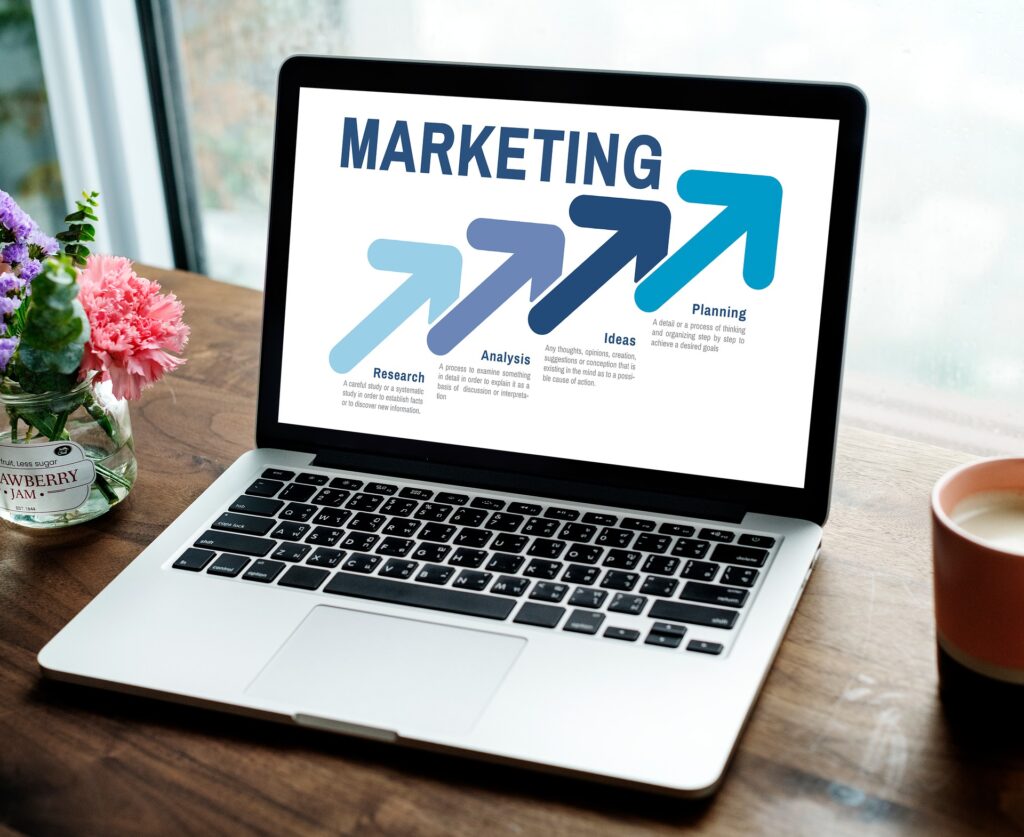
The marketing strategy is your long-term game plan for reaching your target audience and converting them into paying customers. It answers these crucial questions: Who are you targeting? What value can you provide? How will you deliver it?
It shouldn’t be confused with a marketing plan, which is tactical. A marketing strategy sets the general direction every campaign and piece of content must take.
2: Clarify your goals from the start
Start with setting your goals before deciding on any platform or creating content. Without specific goals, your efforts will lack clarity. Consider the SMART principle:
S – SpecificM – MeasurableA – AchievableR – RelevantT – Time-bound
Examples: “Boost my website traffic by 40% within 90 days using SEO and social media” is a specific goal. “Generate more sales” is not.
Pro tip
Align each marketing activity with one specific goal. Everything else is not worth your time.
3: Understand your target audience inside out
Not every audience is your target audience. The more precise your audience, the easier it is to craft effective marketing messages. Create an audience persona considering the following criteria:
1: Demographics
Age, region, annual income, job position, education level.
2: Challenges
What issues are they trying to solve? What irritates them every day?
3: Purchase behavior
Where and how do they research new products and services?
4: Motivations
What result are they expecting from your product or service?
Gather data through surveys, social media, and direct customer feedba
4:Analyze your competitors
The more you understand your competitors and what they are doing, the easier it will be to identify their weaknesses. Start analyzing the following:
Competitors’ contentSEO keywordsSocial media presencePrice messagingCustomer reviews
There are tools such as SEMrush, Ahrefs, and simply using Google Search that can help you with it. Your task here is to find your competitors’ weaknesses and take advantage of them.
5:Select suitable marketing channels
Not all platforms will work for your specific business. One of the most common marketing blunders is trying to cover everything at once. Choose 2-3 channels where you’ll have the largest audience:
SEO + Blog
Perfect channel for building organic traffic over time. Great ROI from consistent use, especially if your marketing is content-focused.
Social media
Which one? Instagram, TikTok, or maybe LinkedIn — just make sure your audience hangs out there.
Email marketing
High conversion rate channel. Always under your control and never affected by algorithms.
Paid ads
Quick results, but you need budgeting and continuous optimization. Good to combine with SEO.
5:Publish relevant content

Content marketing has become the backbone of almost every successful marketing campaign. However, random content is just noise. Whatever form your content takes – whether it’s a blog post, an Instagram story, an email newsletter, or paid advertising, make sure it does one of the following:
Informs your target audienceBuilds trust and credibilityMoves your customers forward to a decision
Find what people interested in your product or service want to know and provide the answers. Do it better than anyone else and the algorithm will do the rest.
Content tip
It only takes one piece of high-quality content to create a blog post, social media captions, emails, videos, and carousels. Make one and share multiple times.
7:Determine a reasonable budget and time frame
Marketing strategy with no budget is simply wishful thinking. Use resources strategically depending on objectives:
Short-Term: Paid ads and partnerships with influencers provide quick visibility, but come at a higher price. Long-term: SEO, email marketing and organic social grow over time and become less expensive per lead as volume increases.
One of the most often used formulas: If a company has been in business for less than 5 years, they should spend 10-15% of their revenues on marketing. For established businesses, the average is 6–10%. Adjust according to the competitiveness in your industry.
8:Test outcomes and continually strive to improve
What is measured is managed.If it is not measured, it is not managed. Include metrics that align and are relevant to your objectives, rather than vanity metrics, which are simply the number of followers. The key numbers to look at:
✓
Conversion rate
What percentage of visitors will perform desired action?
✓
Also known as customer acquisition cost.
What is the cost of acquiring a new customer?
✓
Return on ad spend (ROAS)
What is the return on investment from advertising, ROI?
Conclusion
Building a successful marketing strategy for your business takes clarity, consistency, and a willingness to adapt. Know your audience, show up on the right channels, create content that genuinely helps, and let data drive your decisions. Start small, stay focused, and refine as you grow — because the best marketing strategy is one you actually execute.